4/23/19

Week Sixteen Prompt Response

The Future of Reading and Books

The biggest difference I personally have seen in reading and books since I was a kid is the format in which I can consume them. The internet was just becoming mainstream as I was going through my formative years, so the digital nature that reading has taken on and become mainstream is probably the biggest change. The closest thing I remember seeing as a kid to digital formats were the audiobooks available on cassette tapes and cds. I remember even checking them out once for the book I was reading just for the novelty of the experience. Fast forward to today, and there are a whole host of different ways in which digital reading occurs, and no one gives much thought to them anymore. From my personal thoughts and observations, it seems to me that people today are reading much more than they were when I was a kid, they just aren't necessarily reading books and stories: they are reading articles and the plethora of social media posts that are never ending. 

Looking into the future, I think that books are here to stay for the long run. While people may not continue to read them in the same numbers, the originality and art that goes into them is the necessary fuel that the TV and movie industry needs to continue to thrive. A fun, far-future speculation of mine is that there would be some sort of hybridization between books and television. With the rise of virtual reality and all the technology that is incorporated with that idea, I think it would be a neat trend to use books as fuel for the worlds in which we could explore in virtual reality: you could experience a story literally from the eyes of a main character. 

4/21/19

Week Fifteen Prompt Response

Fiction Promotion

1. Annotated Book Lists - I think this is a very underrated way in which to promote the vast array of books that the library has to offer. Especially with larger libraries, I simultaneously love how huge the collections are, but I can easily feel overwhelmed by just how many options there are to choose from when I am browsing for a new book to read. Granted, my "To-Read" list on Goodreads has considerably reduced the need for browsing physical collections due to the 100+ books I want to read, but I think it would be neat to have a well-done and artfully presented collection of annotated book lists that patrons could use to find books. Even if it is a digital collection of bibliographies, there are already so many fan-made lists of best books out there online. It seems to me that the library could easily fill the role of organizing and keeping many of these types of lists to be able to be used by patrons, and could make that a promotional aspect of the library's collection.

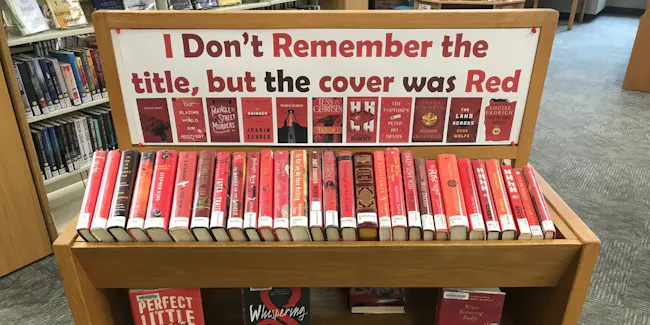
2. Special Displays - The most eye-catching thing for me when I walk into a library are the staff made special displays about certain topics, authors, or other criteria that allow the patron to see books they may never have noticed before. Anything from staff favorites, to LGBTQ+ characters (referencing last weeks discussions), to this hilarious display shown below, patrons will be exposed to books they never knew existed or were part of the library's collection.

3. Purchase Comparisons - A different angle in which I think the library can promote it's collection in a very neat way is be reminding patrons that they are saving a considerable amount of money when using the library for their fiction reading rather than purchasing the books themselves. One example of this would be to have a running tally of the amount of money a patron has saved over the course of a year or their life displayed on their checkout receipt, as seen below. 
Another tool that I would promote to patrons would be internet browser extensions that simultaneously display books, music, and audiobooks that are available at your local library that are currently being viewed on your internet browser. One such example is called "Library Extension" for Google Chrome browsers, found here. The picture below shows that if you are looking up information about a book on Goodreads, the extension software simultaneously shows if the book is available at your local library (bottom center of the pic)

4/8/19

Week Fourteen Prompt Response

The Separation of Urban and LGBTQ Fiction?

After dwelling on this question all day, I think the first and foremost criteria that needs to be addressed are the needs of the community being served. If there is a legitimate interest and specific requests for these types of materials, as the prompt suggests, then by all means we have a duty as librarians to help these people in their quest for finding books of these genres and topics. With that being said, I think that making a permanent section of the library to shelve these materials may be swinging a bit far in the other direction. If the library is already sorted by genre and sub-genre (as the library in Orange City Iowa attempted to do) then this may make more sense to have a permanent section devoted to these genres. The libraries that I go to do not sort their collections this way, however, and I think that there may be better alternatives and compromises for libraries that wish to provide more direct access to books of this nature for their patrons.

Instead of having a permanent section for Urban and LGBTQ+ fiction, I propose that the library has a featured topical section with rotating selections of LGBT+ or Urban literature based on specific sub-genre or themes that will allow patrons to explore and appreciate the more subtle nuances that these broader genres have to offer. This would also meet the concern that it would disrupt the serendipitous discovery of authors because the books would be back in the rest of the collection when they are not part of the specific topic. Some examples include:

  • Fantasy and sci-fi books featuring LGBTQ+ characters
  • LGBTQ+ African-American authors for the month of February for Black History Month
  • LGBTQ+ books from countries other than the U.S.
  • Biographical and autobiographical books
  • Teen and YA novels
  • Graphic Novels by and about the LGBTQ+ community
  • Books by LGBTQ+ authors
The other option that would go hand in hand with this idea is to have updated annotated bibliographies and reading lists to offer to people interested in these topics, split out into various subcategories that mirror the ones listed above. Instead of having a separate permanent section of the library collection, this would still allow people to have easy access to the materials the library has to offer, without having to rearrange the way the library collection is organized. 

4/3/19

Young Adult Annotation

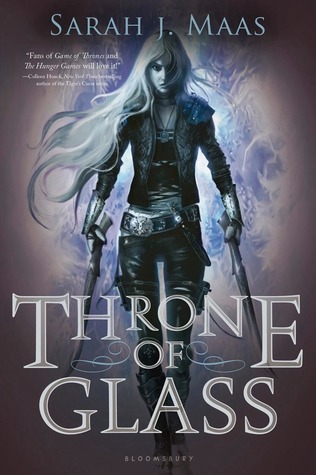
Throne of Glass
by Sarah J. Maas


Genre: Young Adult / Fantasy (High Fantasy)

Publication Date: 2013

Number of Pages: 404

Series: Throne of Glass #1 (out of 7)

Appeal Terms: Strong Female, Action-Packed, World-Building


Synopsis: Celaena Sardothien, at 18-years-old, might possibly be the most notorious, badass, and hardcore assassin that the land of Erilea as ever seen. Well, at least she was until her betrayal, arrest, and enslavement. A year into her sentence, we meet Celaena as she is pulled from the mines by the Crown Prince with an offer of freedom she cannot refuse: if she can win a competition against some of the nastiest and brutal killers, thieves, and warriors in Erliea, her record will be wiped clean and she will serve as the King's champion. With the chance for freedom her only thought, she agrees and is carted off the the capital city of Rifthold. Between her time training and competing, she begins to develop friendships and even romantic interests in some of the least likely places, further complicating her position and once straightforward goal of freedom. To make matters worse, there is something evil lurking in the castle, brutally murdering other competitors in the dark of the night one by one. Celaena must decide where her true friendships lie, who she can trust, and if she can dare love; while doing everything she can to make it through the competitions and not becoming the next victim of the mysterious thing that is stalking the castle. 

Setting: This story takes place in the land called Erilea, that once was made up of many kingdoms of differing people, but which are now being brutally conquered one by one by the King of Adarlan. As with other high fantasy stories, the setting is an integral aspect of this series, and is incredibly detailed and fleshed out, albeit through context rather than direct description (as explained under "language" below) There is even a map that is included in the front of the book to aid the readers as they become more familiar with the sprawling land of Erilea and the diversity of its inhabitants. 

Story Line: This book is the first of seven novels in the series, so this specific story is clearly building and setting the stage for a much larger story arc. This book does have its own standalone plot, and it leaves the reader content for the time being but still craving more of the characters and story in the following books.

Tone: While being high fantasy, this book is still considered young adult, and has lots of humor as well as flirtatious, young romance intertwined in the dark and grim overarching storyline. The tone shifts slightly between chapters as it's told from the perspective of various characters. It also shifts depending on the scene (i.e. romantic vs. action-packed and dangerous).

Characterization: The story is told mostly through the eyes of the main character, Celaena, as she develops and grows as the story progresses. There are some clear distinctions between "good" and "bad" guys, but there are some other key characters that either skirt the line or are purposefully left ambiguous in their motives. These extra layers of character complexity add some depth and intrigue to what could easily have been a shallow plot-line.

Pacing: Unlike adult fantasy, this story picks up rather quickly from the get-go and keeps the reader turning the pages with lots of suspense and action. The chapters are short, which seems to propel the storyline even faster, though it takes place over the course of several months. 

Language: Other than the descriptions needed for the direct involvement of the main characters, the reader picks up on all the backstories of characters and the different regions of Erilea from context as the story progresses. Maas doesn't take a lot of time to go into great detail about the setting and doesn't use sweeping or rich language. Rather, she relies on the quick, rapid fire dialogue that often happens between characters.

Read-Alikes: (Summaries from Novelist)

Sky in the Deep by Adrienne Young (2018) - Raised to be a warrior, seventeen-year-old Eelyn fights alongside her Aska clansmen in an ancient rivalry against the Riki clan, but when faced with her brother's betrayal, and driven by a growing love for her brother's friend Fiske, she attempts to unite the two clans.

Defy by Sara B. Larson (2014) - Seventeen-year-old Alexa's parents were killed by a sorcerer during a raid, so she has disguised herself as a boy, joined Antion's army, and earned a place on Prince Damian's guard--but Antion is ruled by an evil king, and "Alex" must find a way to defeat him and protect her prince.

The Hunger Games by Suzanne Collins (2008) - In a future North America, where the rulers of Panem maintain control through an annual televised survival competition pitting young people from each of the twelve districts against one another, sixteen-year-old Katniss's skills are put to the test when she voluntarily takes her younger sister's place.

4/2/19

Week Thirteen Prompt Response

Adults and YA

Maybe it has to do with the era that I grew up in (born in 1992 and 27 years old now), but it seems to me that it would be hard to make an argument AGAINST libraries spending money on and promoting young adult books today. I took the youth version of this class last semester, and let me tell you, I read some AMAZING young adult and teen books that I loved more than some "adult" books. Particularly on an emotional level, there is something that this genre grabs a hold of, and it resonates with people of ALL ages, not just the teenagers who are the same ages as the protagonists in the stories. If I had to try and pin down what this factor would be, it would be something along the lines of letting people remember what it was like to be that age again. 

With all that being said, providing YA books to adult patrons is a unique challenge. The two libraries that I attend for personal use have separate YA sections: one even has a "high school" shelf that caters to the older end of the YA spectrum and New Adult audience. The other library I attend has an entire "Teen-Zone", which is a closed off room/section of the library for teens to use all to their own. I know that I, as a 27 year old, 6'5" male, feel INCREDIBLY awkward walking into this Teen-Zone to get books to read. I'm sure I am not the only patron who feels this way. This does seem like a great way to meet the needs of YA patrons, but there are also some negative side effects in reaching the adult population who enjoys reading YA books. The first library mentioned, at least has the "high school" section next to the adult fiction sections and are only a few shelves over. I feel far less "creeperish" at this library when picking up books, and it was actually the deciding factor for choosing the library in which to check out the book for this week's annotation. 

Clearly, as librarians, we do not want our patrons to be embarrassed or ashamed of the reading choices and preferences they have, yet this one seems to be a fairly tricky puzzle to solve, and I am not sure that I have a perfect answer. I am looking forward to reading what ideas the rest of you have, especially those already in the field. As a patron, an idea that would make ME feel more comfortable would be to have copies of the upper YA and NA books in both the YA section as well as the adult fiction section, especially if there is a closed off room that houses all the YA materials that is designed for people much younger than me. But there are clearly limitations to that suggestion, and might not even be feasible for libraries with smaller budgets. I absolutely think that as librarians we should be serving adults who enjoy reading YA/NA, but the defining feature of this genre is the very reason it becomes a challenge to shelve, display, and promote to its older audience.