4/23/19

Week Sixteen Prompt Response

The Future of Reading and Books

The biggest difference I personally have seen in reading and books since I was a kid is the format in which I can consume them. The internet was just becoming mainstream as I was going through my formative years, so the digital nature that reading has taken on and become mainstream is probably the biggest change. The closest thing I remember seeing as a kid to digital formats were the audiobooks available on cassette tapes and cds. I remember even checking them out once for the book I was reading just for the novelty of the experience. Fast forward to today, and there are a whole host of different ways in which digital reading occurs, and no one gives much thought to them anymore. From my personal thoughts and observations, it seems to me that people today are reading much more than they were when I was a kid, they just aren't necessarily reading books and stories: they are reading articles and the plethora of social media posts that are never ending. 

Looking into the future, I think that books are here to stay for the long run. While people may not continue to read them in the same numbers, the originality and art that goes into them is the necessary fuel that the TV and movie industry needs to continue to thrive. A fun, far-future speculation of mine is that there would be some sort of hybridization between books and television. With the rise of virtual reality and all the technology that is incorporated with that idea, I think it would be a neat trend to use books as fuel for the worlds in which we could explore in virtual reality: you could experience a story literally from the eyes of a main character. 

4/21/19

Week Fifteen Prompt Response

Fiction Promotion

1. Annotated Book Lists - I think this is a very underrated way in which to promote the vast array of books that the library has to offer. Especially with larger libraries, I simultaneously love how huge the collections are, but I can easily feel overwhelmed by just how many options there are to choose from when I am browsing for a new book to read. Granted, my "To-Read" list on Goodreads has considerably reduced the need for browsing physical collections due to the 100+ books I want to read, but I think it would be neat to have a well-done and artfully presented collection of annotated book lists that patrons could use to find books. Even if it is a digital collection of bibliographies, there are already so many fan-made lists of best books out there online. It seems to me that the library could easily fill the role of organizing and keeping many of these types of lists to be able to be used by patrons, and could make that a promotional aspect of the library's collection.

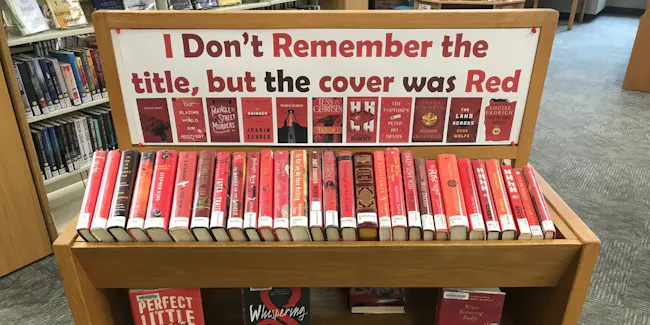
2. Special Displays - The most eye-catching thing for me when I walk into a library are the staff made special displays about certain topics, authors, or other criteria that allow the patron to see books they may never have noticed before. Anything from staff favorites, to LGBTQ+ characters (referencing last weeks discussions), to this hilarious display shown below, patrons will be exposed to books they never knew existed or were part of the library's collection.

3. Purchase Comparisons - A different angle in which I think the library can promote it's collection in a very neat way is be reminding patrons that they are saving a considerable amount of money when using the library for their fiction reading rather than purchasing the books themselves. One example of this would be to have a running tally of the amount of money a patron has saved over the course of a year or their life displayed on their checkout receipt, as seen below. 
Another tool that I would promote to patrons would be internet browser extensions that simultaneously display books, music, and audiobooks that are available at your local library that are currently being viewed on your internet browser. One such example is called "Library Extension" for Google Chrome browsers, found here. The picture below shows that if you are looking up information about a book on Goodreads, the extension software simultaneously shows if the book is available at your local library (bottom center of the pic)

4/8/19

Week Fourteen Prompt Response

The Separation of Urban and LGBTQ Fiction?

After dwelling on this question all day, I think the first and foremost criteria that needs to be addressed are the needs of the community being served. If there is a legitimate interest and specific requests for these types of materials, as the prompt suggests, then by all means we have a duty as librarians to help these people in their quest for finding books of these genres and topics. With that being said, I think that making a permanent section of the library to shelve these materials may be swinging a bit far in the other direction. If the library is already sorted by genre and sub-genre (as the library in Orange City Iowa attempted to do) then this may make more sense to have a permanent section devoted to these genres. The libraries that I go to do not sort their collections this way, however, and I think that there may be better alternatives and compromises for libraries that wish to provide more direct access to books of this nature for their patrons.

Instead of having a permanent section for Urban and LGBTQ+ fiction, I propose that the library has a featured topical section with rotating selections of LGBT+ or Urban literature based on specific sub-genre or themes that will allow patrons to explore and appreciate the more subtle nuances that these broader genres have to offer. This would also meet the concern that it would disrupt the serendipitous discovery of authors because the books would be back in the rest of the collection when they are not part of the specific topic. Some examples include:

  • Fantasy and sci-fi books featuring LGBTQ+ characters
  • LGBTQ+ African-American authors for the month of February for Black History Month
  • LGBTQ+ books from countries other than the U.S.
  • Biographical and autobiographical books
  • Teen and YA novels
  • Graphic Novels by and about the LGBTQ+ community
  • Books by LGBTQ+ authors
The other option that would go hand in hand with this idea is to have updated annotated bibliographies and reading lists to offer to people interested in these topics, split out into various subcategories that mirror the ones listed above. Instead of having a separate permanent section of the library collection, this would still allow people to have easy access to the materials the library has to offer, without having to rearrange the way the library collection is organized. 

4/3/19

Young Adult Annotation

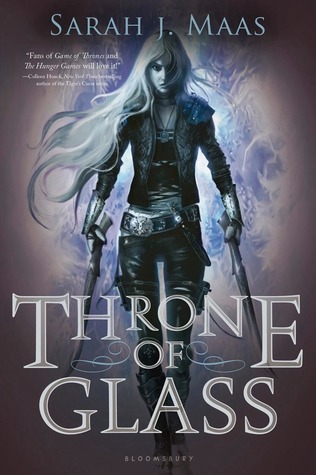
Throne of Glass
by Sarah J. Maas


Genre: Young Adult / Fantasy (High Fantasy)

Publication Date: 2013

Number of Pages: 404

Series: Throne of Glass #1 (out of 7)

Appeal Terms: Strong Female, Action-Packed, World-Building


Synopsis: Celaena Sardothien, at 18-years-old, might possibly be the most notorious, badass, and hardcore assassin that the land of Erilea as ever seen. Well, at least she was until her betrayal, arrest, and enslavement. A year into her sentence, we meet Celaena as she is pulled from the mines by the Crown Prince with an offer of freedom she cannot refuse: if she can win a competition against some of the nastiest and brutal killers, thieves, and warriors in Erliea, her record will be wiped clean and she will serve as the King's champion. With the chance for freedom her only thought, she agrees and is carted off the the capital city of Rifthold. Between her time training and competing, she begins to develop friendships and even romantic interests in some of the least likely places, further complicating her position and once straightforward goal of freedom. To make matters worse, there is something evil lurking in the castle, brutally murdering other competitors in the dark of the night one by one. Celaena must decide where her true friendships lie, who she can trust, and if she can dare love; while doing everything she can to make it through the competitions and not becoming the next victim of the mysterious thing that is stalking the castle. 

Setting: This story takes place in the land called Erilea, that once was made up of many kingdoms of differing people, but which are now being brutally conquered one by one by the King of Adarlan. As with other high fantasy stories, the setting is an integral aspect of this series, and is incredibly detailed and fleshed out, albeit through context rather than direct description (as explained under "language" below) There is even a map that is included in the front of the book to aid the readers as they become more familiar with the sprawling land of Erilea and the diversity of its inhabitants. 

Story Line: This book is the first of seven novels in the series, so this specific story is clearly building and setting the stage for a much larger story arc. This book does have its own standalone plot, and it leaves the reader content for the time being but still craving more of the characters and story in the following books.

Tone: While being high fantasy, this book is still considered young adult, and has lots of humor as well as flirtatious, young romance intertwined in the dark and grim overarching storyline. The tone shifts slightly between chapters as it's told from the perspective of various characters. It also shifts depending on the scene (i.e. romantic vs. action-packed and dangerous).

Characterization: The story is told mostly through the eyes of the main character, Celaena, as she develops and grows as the story progresses. There are some clear distinctions between "good" and "bad" guys, but there are some other key characters that either skirt the line or are purposefully left ambiguous in their motives. These extra layers of character complexity add some depth and intrigue to what could easily have been a shallow plot-line.

Pacing: Unlike adult fantasy, this story picks up rather quickly from the get-go and keeps the reader turning the pages with lots of suspense and action. The chapters are short, which seems to propel the storyline even faster, though it takes place over the course of several months. 

Language: Other than the descriptions needed for the direct involvement of the main characters, the reader picks up on all the backstories of characters and the different regions of Erilea from context as the story progresses. Maas doesn't take a lot of time to go into great detail about the setting and doesn't use sweeping or rich language. Rather, she relies on the quick, rapid fire dialogue that often happens between characters.

Read-Alikes: (Summaries from Novelist)

Sky in the Deep by Adrienne Young (2018) - Raised to be a warrior, seventeen-year-old Eelyn fights alongside her Aska clansmen in an ancient rivalry against the Riki clan, but when faced with her brother's betrayal, and driven by a growing love for her brother's friend Fiske, she attempts to unite the two clans.

Defy by Sara B. Larson (2014) - Seventeen-year-old Alexa's parents were killed by a sorcerer during a raid, so she has disguised herself as a boy, joined Antion's army, and earned a place on Prince Damian's guard--but Antion is ruled by an evil king, and "Alex" must find a way to defeat him and protect her prince.

The Hunger Games by Suzanne Collins (2008) - In a future North America, where the rulers of Panem maintain control through an annual televised survival competition pitting young people from each of the twelve districts against one another, sixteen-year-old Katniss's skills are put to the test when she voluntarily takes her younger sister's place.

4/2/19

Week Thirteen Prompt Response

Adults and YA

Maybe it has to do with the era that I grew up in (born in 1992 and 27 years old now), but it seems to me that it would be hard to make an argument AGAINST libraries spending money on and promoting young adult books today. I took the youth version of this class last semester, and let me tell you, I read some AMAZING young adult and teen books that I loved more than some "adult" books. Particularly on an emotional level, there is something that this genre grabs a hold of, and it resonates with people of ALL ages, not just the teenagers who are the same ages as the protagonists in the stories. If I had to try and pin down what this factor would be, it would be something along the lines of letting people remember what it was like to be that age again. 

With all that being said, providing YA books to adult patrons is a unique challenge. The two libraries that I attend for personal use have separate YA sections: one even has a "high school" shelf that caters to the older end of the YA spectrum and New Adult audience. The other library I attend has an entire "Teen-Zone", which is a closed off room/section of the library for teens to use all to their own. I know that I, as a 27 year old, 6'5" male, feel INCREDIBLY awkward walking into this Teen-Zone to get books to read. I'm sure I am not the only patron who feels this way. This does seem like a great way to meet the needs of YA patrons, but there are also some negative side effects in reaching the adult population who enjoys reading YA books. The first library mentioned, at least has the "high school" section next to the adult fiction sections and are only a few shelves over. I feel far less "creeperish" at this library when picking up books, and it was actually the deciding factor for choosing the library in which to check out the book for this week's annotation. 

Clearly, as librarians, we do not want our patrons to be embarrassed or ashamed of the reading choices and preferences they have, yet this one seems to be a fairly tricky puzzle to solve, and I am not sure that I have a perfect answer. I am looking forward to reading what ideas the rest of you have, especially those already in the field. As a patron, an idea that would make ME feel more comfortable would be to have copies of the upper YA and NA books in both the YA section as well as the adult fiction section, especially if there is a closed off room that houses all the YA materials that is designed for people much younger than me. But there are clearly limitations to that suggestion, and might not even be feasible for libraries with smaller budgets. I absolutely think that as librarians we should be serving adults who enjoy reading YA/NA, but the defining feature of this genre is the very reason it becomes a challenge to shelve, display, and promote to its older audience. 

3/31/19

Nonfiction Annotation

The Good Neighbor
The Life and Work of Fred Rogers
by Maxwell King

Genre: Nonfiction

Publication Date: 2018

Number of Pages: 406 (the last 35 pages are references and an index)

Geographical Setting: The cities Fred Rogers lived in the US and Canada but mainly focused in Pittsburgh and Latrobe PA

Time Period: The life of Fred Rogers: 1928 to 2003

Narrative Context: A mix combining narrative moments with periods of fact-based prose

Subject: The life and work or Fred Rogers

Type: Biography

Appeal Terms: Comprehensive, Richly Detailed, Heartwarming


Summary: This book gives the chronological story of Fred Rogers, starting with him as a child, through the development of his iconic show, Mr. Rogers' Neighborhood, and concludes with his death and legacy. 

Pacing: The pacing is very slow and drawn out as the author takes time to fully explain as much as he can about each stage in Fred Rogers' life and career. 

Characterization: There is really only one main character in the story: Fred Rogers. Although King does introduce many of the most influential and important people in his life and gives at least a little background of each of them before explaining how they are directly related to Mr. Rogers. 

Storyline: The storyline is synonymous with the life of Fred Rogers as he progresses through his life. It is mostly linear, progressing through the stages of his life in each chapter in order that they occured. 

Detail: Incredibly detail oriented, the author gives a comprehensive look at the life of Fred Rogers with as many bits of information as he could glean from interviews and research as he could find. 

Learning/Experience: The reader of this book will learn about the man behind the TV show, and finish with a more complete picture of Mr. Rogers, that is both inspirational and heartwarming.

Language: This book is very factually based, and the language that is used is often very concise and scholarly. However, the language softens considerably in the sections where people are recalling their happy or funny memories of Fred Rogers, as well as when the author is discussing the powerful impact that he had on american society. 

Setting: While not the focal point of the book, the cities and era that Fred Rogers grew up in and lived are well described, and the reader gets a good picture of what US culture was like in the 40s through 80s. King often takes the time to explain the context, both about the environment or the people, that each chapter takes place in.

Tone: The tone of this book is uplifting and positive, with the overall theme of how much of a positive impact Fred Rogers had on his friends and family, those he worked with, and most of all, his TV audience of young children. 


Read-Alikes: (Summaries from Novelist)

I'm Proud of You: My Friendship with Fred Rogers by Tim Madigan - A journalist discusses his friendship with the late children's TV programming host, describing how Rogers welcomed the author into his personal life and church, helping him to mend a long-standing dysfunctional relationship with his own father.

Jim Henson by Brian Jay Jones - Biographer Brian Jay Jones offers the first complete biography of Henson, detailing his personal life, the nature of his creative genius, his collaborations with Frank Oz and other industry stars.

Robin by Dave Itzkoff - The New York Times culture reporter and author of Mad as Hell presents a compelling portrait of Robin Williams that illuminates his comic brilliance, conflicting emotions and often misunderstood character, sharing insights into the gift for improvisation that shaped his wide range of characters, his struggles with addiction and depression and his relationships with friends and family members.

3/30/19

Week Twelve Prompt Response

The Readers' Advisory Matrix: 
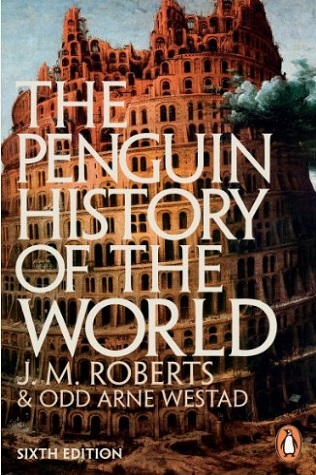
The Penguin History of the World 
by J.M. Roberts & Odd Arne Westad


1. Where is the book on the narrative continuum? 
Highly Fact Based

2. What is the subject of the book?
The history of the world, particularly, the history of humanity from its beginning to present day.

3. What type of book is it?
Reporting

4. Articulate Appeal

What is the pacing of the book?
Slow and meticulous

Describe the characters of the book.
None. The book is focused on the general history of all humanity, not any individual people.

How does the story feel?
Factual, dry, intellectual. 

What is the intent of the author?
To give an accurate and updated recounting of the major events in all of recorded history. 

What is the focus of the story?
How humanity grew and evolved into the various civilizations and cultures that led up to how the world exists today. 

Does the language matter?
Yes. The author goes to great measures to use accurate and concise language to convey the most amount of detail in the least amount of words. 

Is the setting important and well described?
Yes, large parts of each chapter are devoted to describing the context and environment of each particular area of focus.

Are there details and, if so, of what?
Yes, the entire book is an interplay between finding the right amount of details to give proper context without getting too bogged down on any one specific topic.

Are there sufficient charts and other graphic materials? Are they useful and clear?
There is usually at least one map or diagram in each chapter to show the region or concept being described. They are very clear and useful, especially if the reader is not an expert on world geography. 

Does the book stress moments of learning, understanding, or experience?
The entirety of the book is designed to help the reader learn and have a better understanding of the events that led to the world being that way it is today. 

5. Why would a reader enjoy this book (rank appeal)?
Scholarly
Comprehensive
Concise


3/24/19

Week Eleven Prompt Response - Ebooks and Audio Books

Ebooks
I am relatively new to the world of ebooks. I had never used one up until a few years ago when my now wife opened my eyes to the convenience of having multiple books at your fingertips for long trips. Last Cyber Monday, Amazon had a pretty good sale for the basic kindle, so I got one for myself, and while I don't use it often and prefer the physical books, it is still nice to have for the convenience factor alone. From my experience (not working as a librarian), I think a change in appeal factor for an ebook would be the fact that you cannot physically feel how big or small a book is. I know that my own brain will weigh in on my choice of book to read if it is a hefty, massive book, for instance, and that subtle bias disappears since that MASSIVE Stephen King book now weighs hardly anything at all. While not a MAJOR shift, I think that is one to point out.

I'm not so sure that the changing of the font, spacing, or text color would be a major appeal factor change. It seems to be just another way in which ebooks are more convenient and a personal preference taste. It does open up ebooks to meet the needs of more audiences, as enlarging the print could be a huge benefit for someone who has vision problems, for instance. I know my wife will read on her kindle while she is working out on the elliptical at the gym because she can set it on the display in front of her without having to hold it open, and she makes the font a larger size to be able to read easier as her head moves in sync with the machine. 

Audio Books
Audio books are a completely new world to me. I have listened to one whole story (Fahrenheit 451 by Ray Bradbury to be precise) in my life on audiobook, and that was only because I had a 12 hour car ride back from my best friends bachelor party in Nebraska and was running out of options to stay awake. I will say, I was pleasantly surprised at the experience, and would definitely consider it again for solo road trips, but that is about the extent of the ways I personally find used for them. My wife has recently started utilizing them through the library because she now has a 45 minute commute to downtown from our new house, so I can definitely understand the appeal they have as a passive form of entertainment, especially if the eyes are otherwise focused. I do know from others and my wife that the narrator can make or break an audiobook, which is such a unique problem to this format.

3/21/19

Historical Fiction Annotation

The Reader
by Bernhard Schlink
Translated by Carol Brown Janeway


Genre: Historical Fiction

Publication Dates: Original German Copyright 1995
                                English Translation Copyright 1997

Number of Pages: 218

Geographical Setting: Post-WWII Germany (West Germany)

Time Period: 1958 and 1964 (the ending in 1983)

Appeal Terms: Reflective, Sobering, Thought-provoking


Synopsis: *This synopsis contains spoilers. Michael, a 15-year-old young man growing up in post-WWII West Germany, becomes ill on his way home one day and is helped by Hanna Schmitz, a 36-year old tram conductor. After missing school for three months due to his illness, he decides to visit Hanna and thank her for her help. What starts as an innocent gesture of gratitude, quickly develops into an impassioned, illicit sexual affair that lasts for the rest of the summer. That summer he finds himself enthralled with Hanna, who is both overwhelmingly intimate and puzzlingly secretive. The summer ends as quickly as it began with her sudden and inexplicable disappearance from his life. The next time he sees her, six years later, he is a law student and she is involved with the trial he happens to be studying: a trial involving war crimes of Nazis during WWII. As Michael wrestles with his own personal turmoil and tries to comprehend how someone he knows so personally could commit such atrocities, we, the readers, are lead through an emotional parable of Vergangenheitsbewältigung, the German word meaning "the struggle to come to terms with the past." 

Setting: As with all stories in the historical fiction genre, the setting is the most important aspect of the story: without the historical framework, the story wouldn't exist. This book is no exception--it takes place in post-WWII Germany as the country is struggling with its own identity and how to move forward from the Nazi regime. Especially challenging is coming to grips with the horrific actions that people just like them, often family members, neighbors, and friends, were willing to commit. More specifically, this story is tied to the Nazi trials that happened in real life, and the emotions and complexity involved with these trials. 

Tone: The tone of this story is incredibly serious, reflective, and contemplative. The rollercoaster of emotions that Michael experiences are palpably felt by the reader; the lens in which he views the world is continuously shattered and rebuilt as he wrestles with the atrocities committed by people who are not much different than himself.  

Storyline: The storyline of this book is intricately intertwined with the development of Michael's character as the readers follow his experiences, and more importantly, how he reacts to those experiences. Because of this, anyone who reads this book comes away with not only a new intellectual perspective of this historical time period, but an emotional connection to the complexity and struggles that every day humans were going through in post-WWII Germany.

Characterization: The reader follows the perspective of Michael as he grows and develops into an adult, and is able to clearly see the effect that his teenage entanglement with Hanna had on him. The character of Michael and the story that is told feels so real to the reader and so fitting in the timeline of history,  that many people often inquire whether this is an autobiographical memoir instead of fiction. Bernhard Schlink did grow up during this time period, was about the same age as Michael was in the story, and also studied law, but the story is most certainly a work of fiction, although his personal insights clearly add extra layers to the story. 
*Personal side note: I was initially concerned that this book would not technically be considered historical fiction due to the fact that the author was alive during the time period about which he wrote, since Sarricks defines the genre as such. However, I have come to the conclusion that it still fits because 1) Schlink didn't write this book until 1995, almost 30 years after that time in history and 2) the integral role that the real world history has on the story: it could not be told in any other historical context. 

Pacing: Unlike most historical fiction, this book is relatively short at only 218 pages. The pacing does not feel hurried or rushed because of this, however, and the reader is able to become fully-immersed in the story quite easily due to the depth and vividness of the text. 

Language: The language that Schlink uses is incredibly descriptive and rich, yet succinct and not overbearing. It is pertinent at this point to commend the translating abilities of Carol Brown Janeway, who originally translated this story from German in 1997. It seems hard to imagine much got lost in translation. 


Read-Alikes: (Summaries from Novelist)

American Romantic by Ward JustWhile on duty as a young foreign service officer in Indochina in the 1960s, Harry Sanders briefly meets a young German woman who changes the course of his life.

The Little Red Chairs by Edna O'Brien - Disgraced when her village's mysterious healer, who she loved and begged to help her have a child, is arrested as a war criminal, Fidelma flees to England to take migrant work, only to confront her nemesis at a tribunal in The Hague.

An American Marriage by Tayari Jones - When her new husband is arrested and imprisoned for a crime she knows he did not commit, a rising artist takes comfort in a longtime friendship, only to encounter unexpected challenges in resuming her life when her husband's sentence is suddenly overturned.

Beatrice and Virgil by Yann Martel - In a tale exploring the limitations of language in understanding and describing the Holocaust, a novelist and a taxidermist collaborate on a play about a donkey and a howler monkey who have survived a genocide.